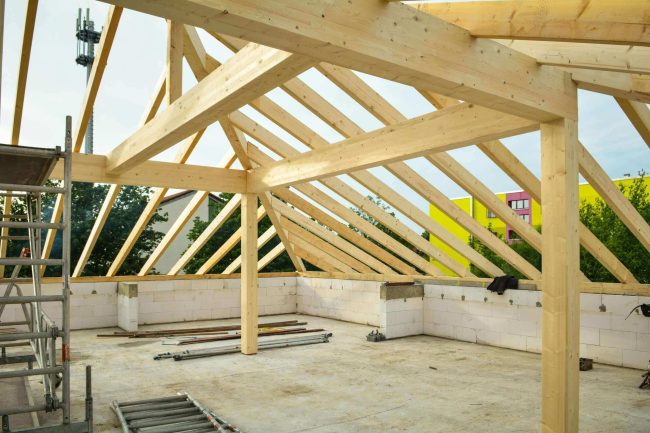
A non habitable loft conversion is a type of roof space adaptation that creates useful storage or utility space in your loft without making it suitable or legally compliant for sleeping or full time living. This is very common as around 60% of UK homeowners use loft conversions primarily to increase storage space in their homes.
What Makes A Loft Conversion Non Habitable?
A non habitable loft conversion is essentially a loft that has been adapted for practical use but is not designed or approved for anyone to live in. It stays outside the requirements needed for a bedroom or living area, which means it does not include the structural changes, insulation levels or fire safety upgrades that would normally be required for a habitable conversion.
In most cases, the space is simply used to store belongings, keep household systems out of sight or free up space in the main parts of the home, rather than being treated as an extra room.
What Features Stop A Loft Being Classed As Habitable?
A loft is usually considered non habitable when it clearly lacks the essentials needed for safe day to day living. This can include having no permanent staircase, relying instead on a pull down ladder, keeping insulation to a basic level rather than full room standards and not installing a fixed heating system.
The finishes are often kept simple too, rather than fully decorated rooms you would expect downstairs. Around 70% of loft storage projects in the UK use retractable ladder access rather than permanent stairs, which helps keep them firmly in the non habitable category and avoids triggering full building requirements.
Why Would A Homeowner Choose A Non Habitable Loft Conversion?
Many homeowners go for a non habitable loft conversion because it gives them a straightforward way to gain extra space without the higher costs and disruption of a full conversion. It is often chosen as a way to manage clutter, store seasonal items or create a more organised home without turning the loft into a liveable room.
Cost is a major factor as well, with full habitable loft conversions often averaging over £30,000 in the UK, making simpler storage focused loft solutions a much more affordable alternative for many households.
What Can A Non Habitable Loft Conversion Be Used For?
Even though it is not suitable for living in, a non habitable loft conversion can still be extremely useful. Most people use the space for general storage, keeping items that are not needed day to day, such as decorations, luggage or archived belongings. It can also be used to house water tanks or other household equipment, helping to free up valuable space elsewhere in the property.
Do Non Habitable Loft Conversions Need Planning Permission?
In many situations, non habitable loft conversions fall under permitted development, meaning planning permission is not usually required. However, building regulations can still apply depending on what work is carried out.
The key point is that the space must remain clearly non habitable, so it cannot be upgraded or used as a bedroom or permanent living area without further approvals.
What Are The Risks Of Using A Non Habitable Loft As Living Space?
Using a non habitable loft as a bedroom or regular living space can create a number of issues. It may not meet fire safety standards, structural requirements or insulation levels needed for habitation, which can lead to problems with building control and insurance.
It can also cause complications when selling a property as surveyors may flag that the space has been used in a way it was not approved for.
How Can NorthSouth Help With Loft Conversions?
At NorthSouth, we are loft conversion specialists who can provide clear advice on both habitable and non habitable loft options. We help homeowners to understand what is realistically possible within their existing roof space and guide them towards solutions that make the most sense for their needs, whether that is simple storage or a full conversion. Our experience ensures that projects are planned properly from the start and that they are aligned with current regulations.
The Bottom Line
A non habitable loft conversion is a practical way to make better use of unused roof space without turning it into a full living area. For many households it offers an affordable and efficient way to increase storage and improve organisation within the home, and NorthSouth can provide expert guidance on the best approach for each property!

Matt Hack is a loft conversion building specialist who works across Yorkshire. With over 16 years of industry experience, he focuses on precision craftsmanship and a commitment to delivering spaces that feel as premium as they look.